
On 2018 Manonatha Prabhu was asked to speak about Srila Prabhupada.
Place: Vrindavana, India
Time: 22:04
Video recording:
Place: Vrindavana, India
Time: 22:04
Video recording:
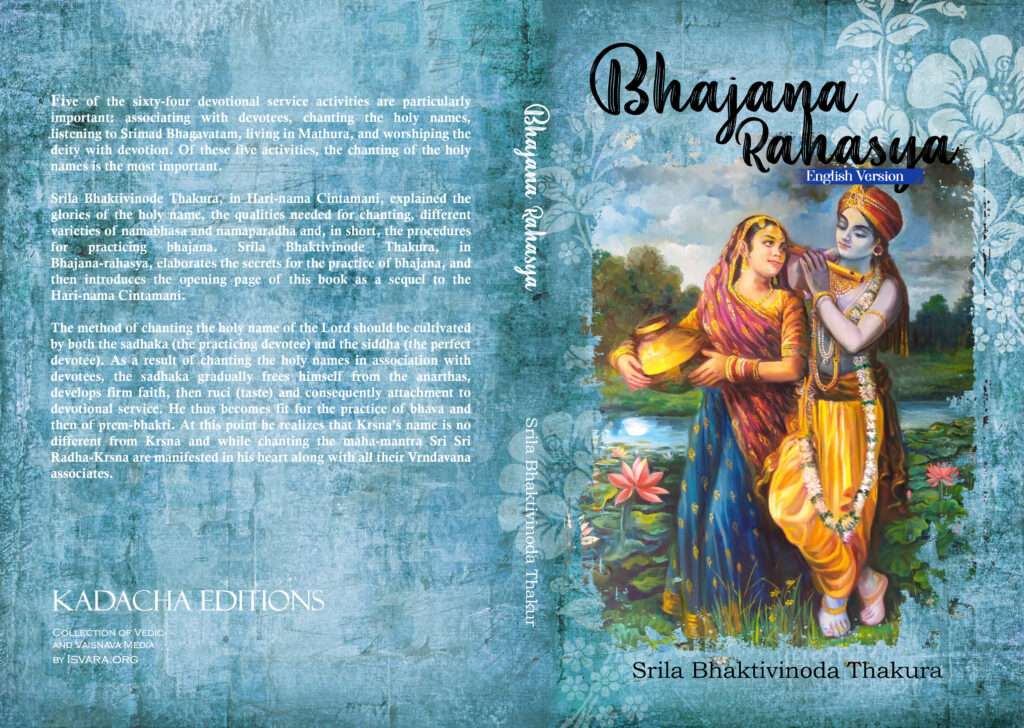
Sri Bhajana-rahasya was compiled by Srila Bhaktivinode Thakura. With this book, the great teacher gives us a hint of his own method of bhajana, a guide for his sincere followers. The undersigned Akincana, a few years ago, carefully observed him reciting the slokas contained in this text and at the same time enjoying the overwhelming ecstasy of God’s love.
The realm of Bhakti offers the arcana to those who are nistha at the level of kanistha. It is sometimes difficult for many to understand the difference between arcana and bhajana. That is why the word arcana is misunderstood as bhajana. The performance of navadha-bhakti (nine ways to connect to the Supreme Personality of Godhead) is the basis of bhajana. The arcana is included in navadha-bhakti and is therefore admitted as a part of bhajana. It can be concluded, therefore, that being the arcana part of the bhajana, it cannot be equivalent to the whole.
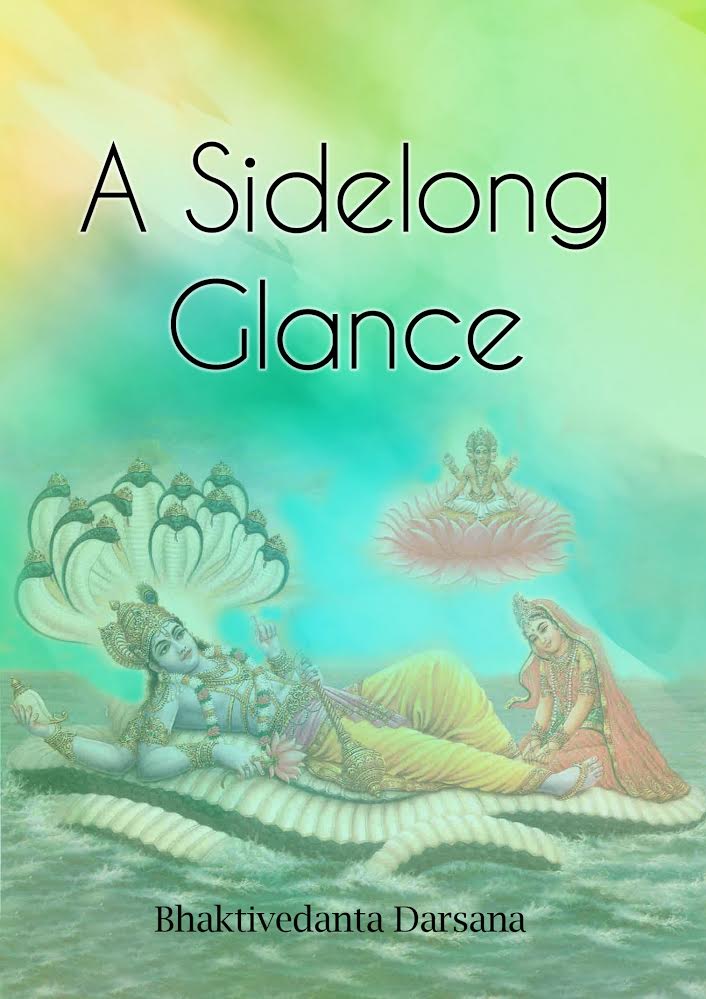
Srimati Radharani fascinates Sri Krishna by looking at him in this way. It is an irresistible and full of attractive look. We also have a strong desire to one day be fascinated by the way Srimati Radharani is, at all times, calling us back to the spiritual world, where life is filled with eternal knowledge and happiness.
"A Sidelong Glance" is a type of literature that in Sanskrit is called sangraha, or ‘collection of writings’. We write a lot, both for notes and for answering questions, and the only way to keep them from getting lost and to remain available for the present and future generations is to publish a book on a regular basis.
Most of these articles have been written by us and a few of them by other authors. We have chosen to publish the entire Puranjana story by Srila Prabhupada for the richness of its philosophical content. It is so beautiful and profound that we could not resist.
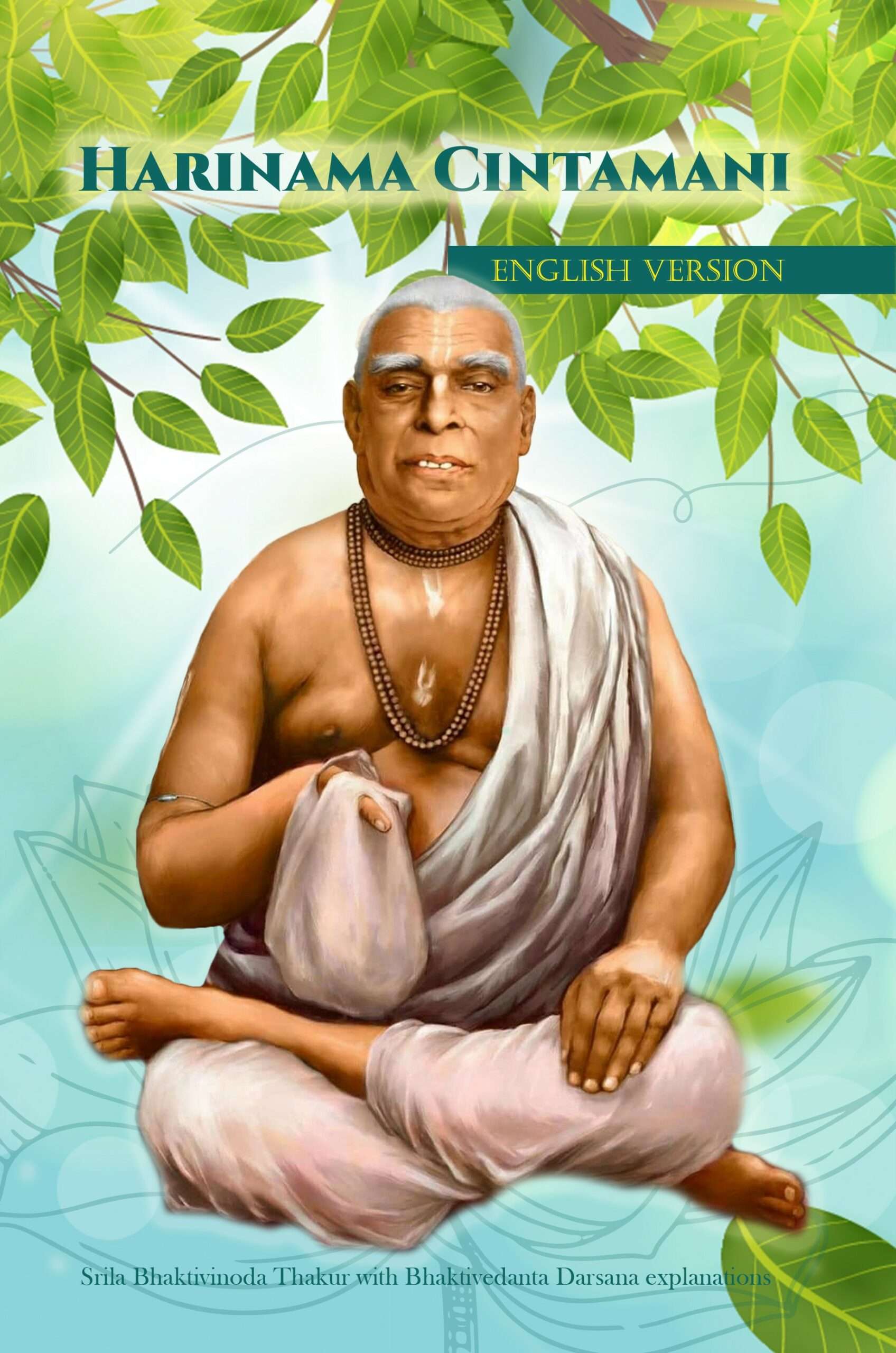
Sri Harinama Cintamani
a book in English by Bhaktivinode Thakura
It's book no. 56 published by Kadacha Editions!
Table of Contents
Notes and thanks from the Editors
Introduction by Sri Bhaktivinoda Thakura
Words of enlightenment
Chapter 1
Video Clases n. 80
Duración del video 11:04
Registrado el 14 de junio de 2024
La nostra casa en Youtube
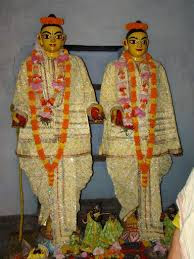
Vivía en un pueblo a orillas del río Ganges conocido como Ambika-Kalna. Sri Caitanya Caritamrita, de Srila Krishnadas Kaviraja, describe a Gauridasa Pandit como “el emblema del servicio devocional más elevado en amor por Dios; quien tuvo la mayor potencia para recibir y entregar tal amor. Convirtiendo al Señor Caitanya y al Señor Nityananda en los Señores de su vida, Gauridasa Pandit sacrificó todo por el servicio del Señor Nityananda”.
Una vez, cuando el Señor Caitanya se estaba preparando para tomar sannyasa[2], visitó a Gauridasa acompañado por Nityananda Prabhu.
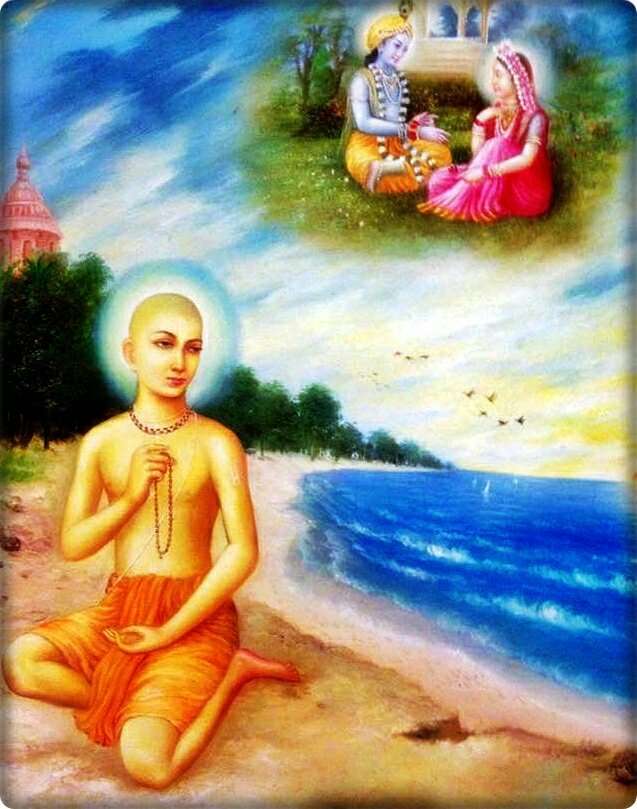
I worship Gauracandra, the golden moon, lying asleep in His bed at sunrise, His body injured from the previous night’s saṅkīrtana. Mother Śacī entered His sleeping chambers, observed Gaura’s injuries and cried,
“O my son! How has Your body become wounded?”
In great anxiety, mother Śacī repeatedly caressed Gaura’s body to awaken Him and help Him rise from bed.

Invitado: ¿cuáles son los principios filosóficos básicos?
Respuesta
El “ABC” de nuestra filosofía es el siguiente:
Primero, cuando usted en la mañana, al levantarse, va al baño, la primera cosa que hace antes de comenzar a bañarse, es ponerse enfrente de un espejo y se mira para verificar en que condición está. Cuando ve la cara en el espejo piensa, yo soy esto. Yo soy este señor, yo soy esta señora. Usted se identifica, piensa que “yo soy esta cara, yo soy este cuerpo”. Esto es errado. Nosotros no somos lo que vemos, no somos el origen de la imagen que se refleja en el espejo. No somos este cuerpo, que es sólo una cobertura de lo que realmente somos. Nosotros somos almas espirituales que al presente no tienen un cuerpo espiritual y por esta razón tienen uno material.
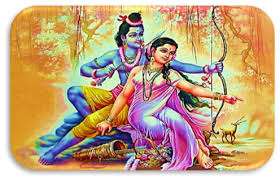
Rama era serio, controllato, quasi se la gioia della vittoria non lo toccasse. Tutti lo guardarono. C’era qualcosa di strano nelle sue parole. Perché aveva detto che Vibhisana voleva vederla? Hanuman corse da Sita. La trovò sconsolata, seduta sotto lo stesso albero nello stesso giardino. Quando lo vide il suo viso si illuminò. Gli occhi ansiosi interrogavano.
“Sono venuto a portarti le notizie degli ultimi avvenimenti,” disse Hanuman sorridente. “La tua sofferenza è finita. Questa ingiusta prigionia è giunta a termine. Sei finalmente libera. Lanka è stata conquistata e Ravana è stato ucciso insieme ai suoi parenti e ai suoi generali. Ora è Vibhisana il Signore di Lanka e desidera vederti. Preparati, dunque. Ti accompagnerò da lui.”
Tanta era la gioia che sentiva nel cuore che non poté proferire parola. Hanuman gettò uno sguardo alle guardiane che tentavano di nascondersi, terrorizzate.
“Principessa,” disse Hanuman con cipiglio severo. “Se vuoi posso uccidere queste Rakshasi che per così tanto tempo ti hanno causato dolore.”
